
Cinematography of Spirited Away
- Shun Qi
- Feb 21, 2021
- 4 min read
Updated: Mar 28, 2021
Cinematography is the most important factor in making good movies. Decent cinematographers are able to use certain camera angles to make the audience involved in their world.
Spirited Away, a nifty-bit animated film has a few great notable cinematography techniques used in the film. Prior to entering the deep analysis, Spirited Away by Hayao Miyazaki is created with an "immersive realism" theme.
Immersive Realism is often used in the worldbuilding, character building, and movement of characters under the creation of Miyazaki. Spirited Away is a world that connects the Shinto (spirit) with humans. Each and everything from the world of Spirited Away is associated with realism, considering they are actually animation/imagination.
Cinematography of Spirited Away's World
1. The Tunnel

This scene provides the narrative similar to "Alice in the Wonderland" as Chihiro and her parents are disconnecting with the human world and entered the shinto world. The tunnel is used as a purpose of transitioning between both worlds.
2. Chihiro's parents

This scene indicates the parents of Chihiro is actually less sensitive to her feelings. The parents only focuses on what's benefiting them (e.g. moving to the new town and using the shortcut) and completely ignored the feelings of their disaffected child.
3. The streets of abandoned theme park

This scene uses wide shot to indicate that the world of Shinto is not much different compared to the human world. Indeed, this explains the philosophy of Japanese Shinto, the coexistence of spirit and human.
4. Greed

This scene perfectly describes the greed of mankind featuring a wide shot of Chihiro and the polluted No-Face. The remains of foods which covered the bottom of this scene indicates that human greed can never be fulfilled. The walls of this room is painted with Japanese Yaokai (Monster) whose nature is filled with evil purposes as well. Chihiro (unpolluted) is so small in contrast with the polluted No-Face, this scene perfectly describes the greed consumed by mankind can only make him looks like a monster.
5. The Bathhouse

This scene perfectly portrayed the personality of each characters in Spirited Away. The low angle camera shot of this scene shows Chihiro looking back at the bathhouse, approaching train and No-Face. The little pig (actually baby Boh) reaching out for a little crab (or insect) shows us how far he has grown from being over-protected baby. The bathhouse in the far back of the scene suggested the industrialization and greed that are ruining both humanity and nature. No-Face in this scene is the perfect example of a recovering polluted individual who is trying to distance himself from the corrupted bathhouse.
6. The Endless Sea
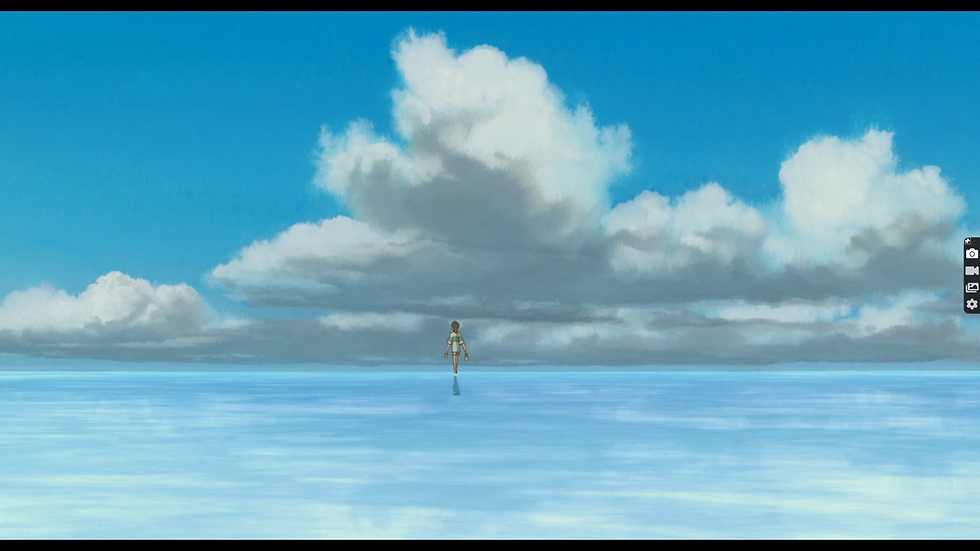
Right after the chaotic hunt by No-man, Chihiro is going to Zeniba's house for the redemption of Haku. As the scene shows, Chihiro is walking at a point where the sky and the sea are intertwined. This scene also represents the mystery of future, as Chihiro bravely take charge and walking to the unseen train station, it shows that she has grown from a resentful kid to a matured one. This scene portrays the heart of a youth entering their future too, Miyazaki suggested us to be brave and walk into our unforeseen future.
7. The Train of Afterlife

At the train of afterlife, everyone except Chihiro and No-Face were looking down. The shadowy figures on this train can be describes as lost souls as their action justified this description. Chihiro accepted No-Face despite his outrageous destruction back in the bathhouse, but they did not speak nor interact with each other. This action also shows us the kind side of Chihiro because she understands the good but misguided intentions of No-Face. Contrasting to other lost souls on the train of afterlife, Chihiro and No-Face both sit straight and look forward because they are determined to reach their own goals.
8. The Mirror Reflection of Chihiro

This scene of medium close-up shot of Chihiro looking out of the window and her determined face reflected on the window. The scene starts to zoom in on Chihiro's unfazed determined face, this suggested she is more focused on her final objective as the goal is closer. Her determined look reflected on the window shows the audience that Sen (her spirit world name given by Yubaba) and Chihiro (her true name) are both focuses on this trip to save Haku. After all, Miyazaki has emphasized the power of identity and name, Chihiro (Sen) has grown as person but without any changes to her original personality.
9. Flying with Haku

This wide-shot scene of Haku flying in the sky with Chihiro after the departure from Zeniba's house shows us the masterpiece of atmosphere creating. Associated with the music associated, the audiences are exposed to the full view of sky in spirit world. For most audiences, they are just like Chihiro when watching this scene, flying with Haku.
10. Everyone

The scene where Chihiro walk forward to pick out her cursed parents from a group of pigs. This scene included almost everyone from the bathhouse but Haku, this hints the departure of Haku with the bathhouse mentioned later in the film. It also shows that they are very concerned witnessing Chihiro's final task.
The Final Scene of Spirited Away is Chihiro looking back to the tunnel she entered. This gives the audience a vibe of surrealism, questions like did all this happen? will be raised. The scene associated with the the music also gives us the nostalgia vibe off this scene.

Written by Shun Qi
(866 words)

Comments